If you have ever sat in the dental chair while a technician positions a small sensor near your cheek, you may have wondered what the dentist is actually looking for. It is a completely normal question, especially if you or your child has no pain, no obvious problems, and a smile that looks perfectly fine to you.
Dental X-rays let your dentist see the parts of your mouth that no visual exam can reach, including the spaces between teeth, beneath the gum line, and inside the roots themselves. Dr. Hamid Barkhordar and the team at Dentist of Anaheim work with families who want to understand each step of their care, including why dentists take X-rays.
Keep reading to learn what different types of X-rays detect, how often they are recommended by age, what the safety picture looks like for children, and what the process actually feels like from start to finish. The goal here is plain, honest information so you can walk into your next visit feeling informed rather than uncertain.
What Dental X-Rays Help Reveal
Dental X-rays give your dentist a complete picture of your oral health, not just the surface your eyes can see. They are among the most practical tools available for catching problems before they lead to serious, costly repairs.
Problems That Cannot Be Seen During a Visual Exam
A dentist can spot a lot during a visual check: staining, visible chips, inflamed gum tissue. But many of the most common dental problems are hidden. Cavities between teeth, bone loss beneath the gums, and infections deep inside a root are all invisible to the naked eye.
X-rays let your dentist look at the internal structure of each tooth, the bone supporting it, and the space where roots sit. A small cavity caught between two back teeth on an image is a quick filling. If left undetected, that same cavity can reach the nerve and become a much bigger problem.
Images also track change over time. When your dentist compares a new set of X-rays to images from a previous visit, they can see whether bone levels are stable, whether a filling is holding, or whether something new has developed since your last cleaning.
How Images Support Early and Preventative Care
Early detection is the core reason imaging matters. Problems found at an early stage are almost always simpler, less expensive, and less uncomfortable to treat than problems found after symptoms appear.
For families in Anaheim managing busy schedules, catching a cavity early means one short appointment instead of a longer procedure down the road. That kind of preventative care pays off in time, comfort, and long-term oral health for every member of the family.
Once you understand what X-rays can find, it helps to know which type of image your dentist is actually taking, and why.
Common Types of Dental X-Rays
There are several types of dental X-rays, each designed to show a specific part of your mouth. Knowing the difference helps you understand why your dentist may request one type over another.
Bitewing Images
Bitewing X-rays are the most familiar type. You bite down on a small tab while the sensor captures the upper and lower back teeth together in one image.
These images are especially good at revealing cavities between teeth and checking the height of the bone between your upper and lower jaws. They are a standard part of routine checkups for both children and adults. Most healthy patients have bitewing images taken once a year.
Periapical Images
A periapical X-ray shows the entire length of a single tooth, from the visible crown all the way down to the tip of the root and the surrounding bone. This type of image is often requested when a specific tooth is causing concern, such as sensitivity, pain, or swelling.
It gives your dentist a detailed view of the root structure and the surrounding tissue. If there is an infection, a cyst, or a root that has changed shape, a periapical image is often the clearest way to see it.
Panoramic Images
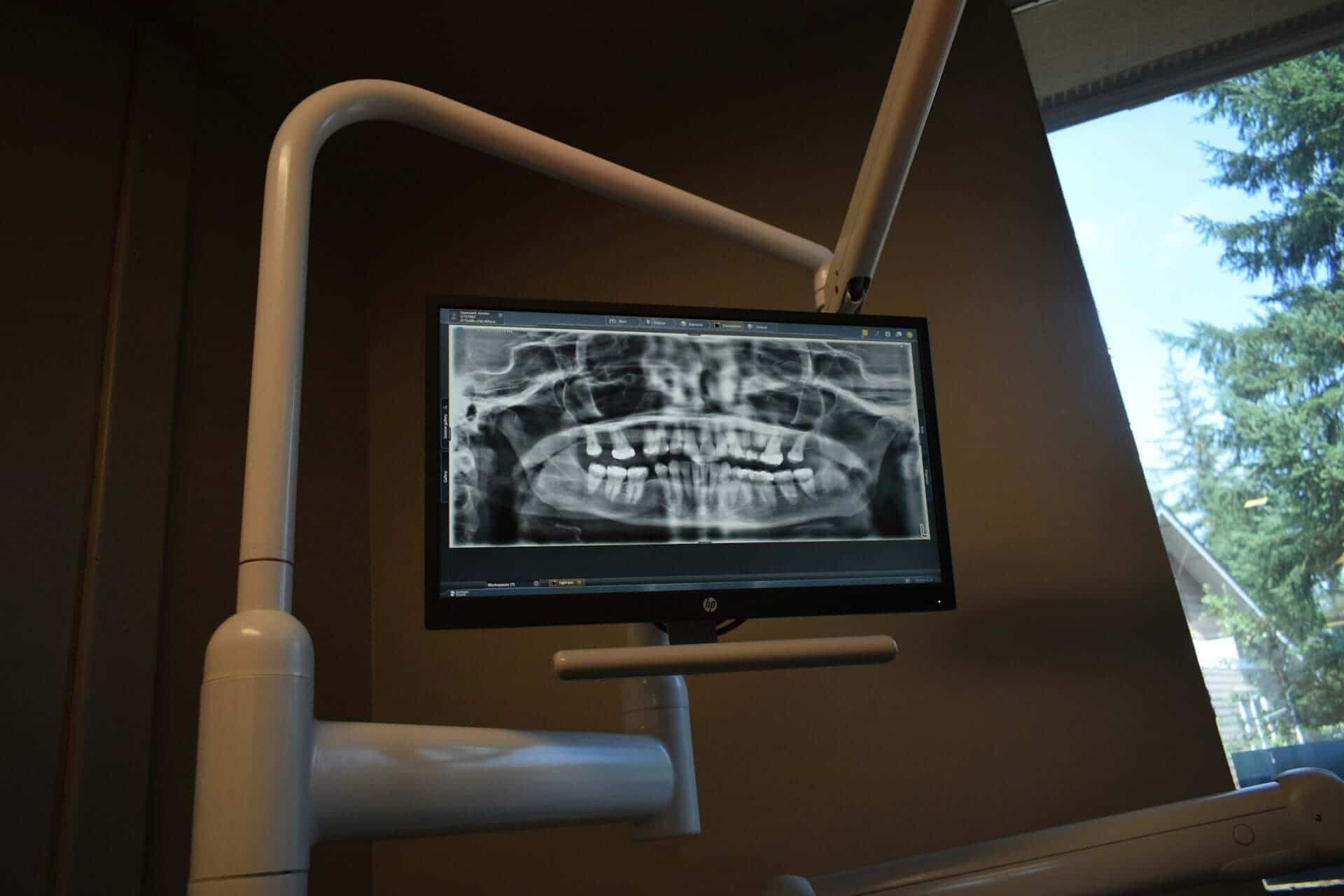
A panoramic X-ray captures the entire mouth in a single wide image. The machine rotates around your head, so nothing is placed inside your mouth, which many patients find more comfortable.
This type is commonly used for orthodontic planning, evaluating wisdom teeth, and getting a broad view of jaw structure. It is not a substitute for the detailed images bitewing and periapical X-rays provide, but it gives a valuable overview that supports bigger-picture treatment decisions.
The table below summarizes each type at a glance:
X-Ray Type | What It Shows | Common Uses |
Bitewing | Upper and lower back teeth together | Cavities between teeth, bone levels |
Periapical | Full tooth from crown to root tip | Infections, root issues, abscesses |
Panoramic | Entire mouth and jaw in one image | Orthodontic planning, wisdom teeth |
Knowing which image does what makes it easier to understand when each is recommended, especially across different age groups.
When X-Rays Are Usually Recommended
Dental imaging is not a one-size-fits-all schedule. Your dentist considers your age, oral health history, and risk factors before recommending how often to take images.
Children and Growing Smiles
Children often need X-rays more frequently than adults because their mouths are changing rapidly. Baby teeth hold space for permanent teeth, and X-rays help confirm that development is on track beneath the surface.
For a child who has never had a cavity and shows healthy gum tissue, bitewing images are typically recommended once a year. For a child with a higher risk of decay, more frequent imaging may be appropriate. Panoramic X-rays are often taken as permanent teeth begin to come in, around ages six to ten, to guide planning for the transition.
Adults With Routine Dental Needs
For adults with healthy teeth and gums, bitewing X-rays once a year are a common recommendation. A full set of X-rays, which includes multiple views, is typically taken at a new patient appointment and then repeated every three to five years if oral health remains stable.
If you are new to a dental office, your dentist will likely request a full set to establish a baseline. That baseline is what makes future comparisons meaningful.
Patients With Higher Risk Factors
Some patients benefit from more frequent imaging. The factors below are common reasons a dentist may suggest a closer imaging schedule:
A history of frequent cavities or gum disease
Active orthodontic treatment with braces or aligners
Dry mouth caused by medications
A diet high in sugar or acidic foods
Smoking or tobacco use
A weakened immune system
For patients managing any of these factors, more frequent X-rays are a proactive choice, not an unnecessary one. The goal is always to stay ahead of problems rather than respond to them after they grow.
Safety Questions Many Parents Ask
Safety is a completely reasonable concern to raise, especially when children are involved. The good news is that modern dental imaging has reduced radiation exposure significantly compared to older methods.
How Modern Dental Imaging Reduces Radiation
Digital X-rays, which are now standard at most dental offices, use far less radiation than traditional film-based X-rays did. The difference is meaningful. Exposure from a full set of digital dental X-rays is comparable to the amount of natural background radiation you receive on a short flight.
Lead aprons and thyroid collars are used as an added layer of protection during imaging. These are standard safety measures that reduce scatter radiation to surrounding areas. For most patients, the diagnostic benefit of finding a hidden cavity or bone issue early is far greater than the minimal risk of the imaging itself.
What to Know About X-Rays for Kids
Many parents feel uncertain about X-rays for young children, and that concern is worth addressing directly. When dental X-rays are taken at appropriate intervals and only when clinically needed, they are considered safe for children by dental and medical authorities.
The key factors that keep pediatric imaging safe include using the smallest sensor possible, limiting exposures to what is clinically necessary, and always using protective shielding. A dentist who follows these guidelines is making a thoughtful, individualized decision for your child, not running through a routine checklist.
If you are ever unsure about why a specific image is being taken, asking your dentist is always appropriate. A good dental team welcomes those questions and will explain the reasoning clearly.
What Happens During the Imaging Process
The process of taking dental X-rays is quick and, for most patients, entirely comfortable. Knowing what to expect before your appointment makes it easier for both adults and children.
How Long the Appointment Usually Takes
For a standard set of bitewing X-rays, the imaging portion of your visit typically takes just a few minutes. A panoramic X-ray takes even less time since it involves only a single rotation of the machine around your head.
Digital images appear on screen almost immediately, which means your dentist can review them with you during the same appointment. There is no waiting for film to develop, and no delay between the imaging and the conversation about what was found.
Ways the Team Helps Patients Feel Comfortable
For patients who feel nervous about the sensor in their mouth, especially children with a sensitive gag reflex, dental teams use techniques to make the process easier. Positioning the sensor closer to the front of the mouth, coaching slow nasal breathing, and using smaller pediatric sensors all help.
Children respond well when the process is explained in simple, friendly terms before it begins. A calm walkthrough of what the equipment does and what they will feel reduces anxiety significantly. For adults who feel uneasy, taking a moment to ask questions before the imaging starts is always welcome.
Understanding what happens during imaging naturally leads to the broader question of when your dentist might recommend a new set and what to ask when that happens.
When It Makes Sense to Ask More Questions
Feeling comfortable enough to ask your dentist questions is a sign of a healthy patient-provider relationship, not an inconvenience. Knowing what to ask helps you stay informed and confident.
Reasons a Dentist May Recommend New Images
There are several situations in which a dentist may recommend X-rays outside the routine schedule. These include:
You are a new patient, and no records are available from a previous dentist
You are experiencing tooth pain, swelling, or sensitivity
A filling, crown, or other restoration needs to be evaluated
Your dentist wants to monitor a specific area that was identified in a previous image
You are starting orthodontic treatment
Each of these situations has a clear clinical reason. When a dentist requests imaging, asking "what are you hoping to find?" is a fair and useful question. Most clinicians appreciate a patient who wants to be involved in their own care decisions.
How to Talk Through Concerns With Confidence
If you feel uncertain about a recommended X-ray, you can ask your dentist to walk you through the reasoning. A straightforward question like "Can you tell me why this image is needed today?" is always appropriate.
You can also ask how long it has been since your last set and whether your current oral health history supports the timing. Good dental care is a conversation, not a procedure done to you. The more context your dentist shares, the more confident you will feel about saying yes to care that genuinely serves your health.
Frequently Asked Questions
Are Dental X-Rays Really Necessary if My Teeth Look and Feel Fine?
Yes. Many dental problems, including cavities between teeth, bone loss, and infections near roots, produce no symptoms in their early stages. X-rays let your dentist find and treat these issues before they cause pain or require more complex care.
How Often Should I Have Dental X-Rays, and What Makes That Schedule Change?
Most adults with healthy teeth and gums have bitewing X-rays once a year and a full set every three to five years. That schedule can shift if you have a history of frequent cavities, active gum disease, dry mouth, or are undergoing orthodontic treatment.
What Problems Can X-Rays Find That a Regular Dental Exam Might Miss?
X-rays reveal cavities forming between teeth, bone loss beneath the gum line, abscesses near tooth roots, cysts, and early signs of infection. These conditions are not visible during a standard visual exam, no matter how thorough it is.
Are Dental X-Rays Safe, and How Is Radiation Kept Low for Patients?
Digital dental X-rays use a small fraction of the radiation that older film-based systems required. Lead aprons and thyroid shields are used during imaging, and exposures are limited to what is clinically necessary. The diagnostic value of catching a problem early far outweighs the minimal radiation involved.
Why Do Kids Need Dental X-Rays, Even When Their Baby Teeth Seem Healthy?
Baby teeth are actively shaping the space for permanent teeth, and problems can develop beneath the surface without any visible signs. X-rays confirm that development is progressing normally and catch decay early, when it is easiest to treat and least likely to affect the incoming permanent teeth.
What Is the Difference Between Bitewing, Panoramic, and 3D Dental X-Rays, and When Is Each Used?
Bitewing X-rays show the upper and lower back teeth together and are the most common type used during routine checkups to detect cavities and check bone levels.
Panoramic X-rays capture the entire mouth in a single image and are used for orthodontic planning or for evaluating wisdom teeth.
3D cone beam imaging provides a detailed three-dimensional view and is typically reserved for implant planning or complex cases that require a more precise look at bone structure.
A Simple Next Step for Peace of Mind
Getting dental X-rays is one of the most practical steps a dentist can take to protect your long-term oral health. They are not a formality; they are how problems get caught before they cause pain, disruption, or bigger expenses.
For Anaheim families managing multiple schedules, understanding routine procedures, such as imaging, can make it easier to commit to regular checkups for every household member. When the process feels familiar, and the reasoning is clear, showing up for that appointment becomes a much simpler decision.
Ready to put these tips into practice with a team that knows Anaheim families? Schedule your new patient exam at Dentist of Anaheim and let the team take a look. Questions about dental imaging or your child's first visit? Call (657) 571-8758 and the staff will find a time that works for your whole family.